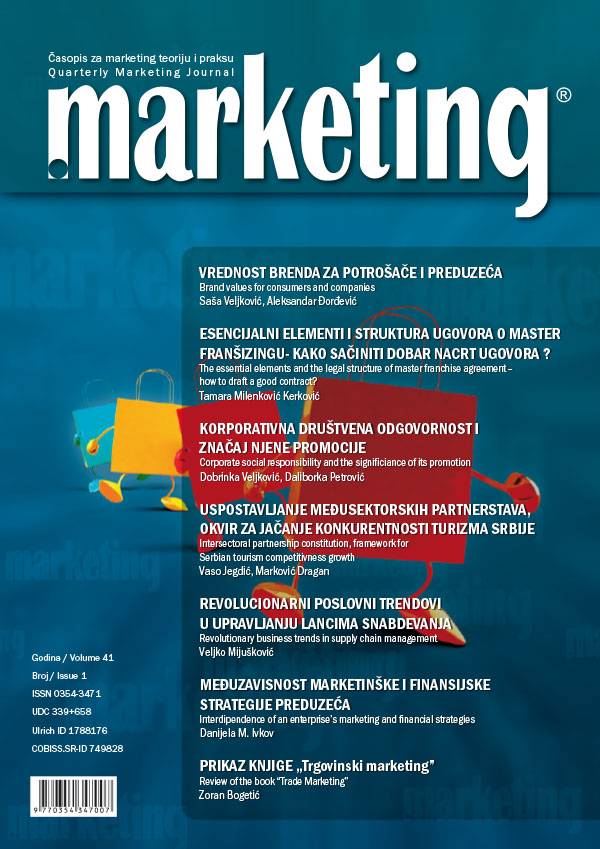
Esencijalni elementi i struktura ugovora o master franšizingu – Kako sačiniti dobar nacrt ugovora?
The Essential Elements and the Legal Structure of Master Franchise Agreement – How to Draft a Good Contract?
Apstrakt
Kreiranje pravnih dokumenata prilikom sačinjavanja ugovora o frašizingu jedan je od najvećih izazova za pravnika. Za to je mnogo razloga, počev od specifičnosti i fluidnosti predmeta ovog ugovora franšize, koji u sebi nosi čitav set prava i pravu sličnih ovlašćenja. Težina ovog zadatka time je veća jer su prava i obaveze ugovornih strana kod ovog ugovora specifične, brojne i veoma razuđene. Ugovor o master franšizingu uvek je ugovor koji nastaje u međunarodnom pravnom kontekstu a potrebno ga je implementirati kroz jedinični ugovor na nacionalnom planu. U većini nacionalnih zakonodavstava ugovor o franšizingu je neimenovan ugovor čija obligaciono-pravna dejstva nisu uredjena kako imperativnim tako ni dispozitivnim normama domaćeg prava. Etičke norme koje sadrže Kodeksi nacionalnih i međunarodnih udruženja često su jedini eksplicitni izvor prava na nacionalnom planu. U praksi zaključivanja ugovora o franšizingu postoji danas veliki broj tzv. template ugovora tj. unapred pripremljenih tipskih ugovora, koji su bez izuzetka kreirani od strane davalaca franšizinga, a koji po pravilu pripadaju pravnoj tradiciji common law pravnog sistema, čija je osobenost obimnost i unošenje u ugovorni korpus solucija za sve moguće predviđene slučajeve. Paradoks je da ovi gotovi formulari, umesto da olakšaju, gotovo uvek otežaju posao kontinentalnom pravniku, nenaviklom na ugovore koji broje vise desetina, pa i stotinu stranica. Pored svih ovih teškoća, ovaj izazov za pravnika, time je i veći jer ugovor o franšizingu, kao malo koji posao tangira veliki broj grana i oblasti prava, pa je tako pored prava ugovornog trgovinskog i obligacionog prava neophodno poznavati i nacionalna prava industrijske svojine i autorska prava, pravo zaštite konkurencije, poresko, radno i pravo privrednih društava, ali i stvarno pravo, kao i pravo osiguranja, ali i adminsitrativne propise prava spoljnotrgovoinskih poslova, prava stranih ulaganja, kao i pravila koja uređuju onaj sektor privrednih delatnosti čijoj oblasti posluje davalac franšizinga. Za izazove koje će pred domaće pravnike stvarati ugovori o master franšizingu sve su značajnji međunarodni autonomni izvori prava, poput ICC Modela – Tipskog međunarodnog ugovora o franšizingu iz 2002.god. i Vodiča UNIDROIT za međunarodne master franšizing aranžmane koji je svoje dopunjeno izdanje imao u 2007.god. i čiji se prevod na srpski jezik očekuje.
Abstract
The creation of the draft and other legal documents in franchisig transaction emanates the one of the most stressfull challenge for the civil law lawyer. There are many reasons which create big obstacles in process of successfully drafting master franchise agreement. One of the main difficulties faced by the parties engaged in internationl trade is the lack of uniformed rules for the franchising agreement as well as franchising being anonomous contract in the most of legal systems of the world. Besides that, the franchise (emanating goodwill) as the legal object of the franchising agreement is sui generis and fluid derives from the various numbers of rights and licence simmilar to right, such as trade names, trade marks and the shop signs, logos, utility models, designs, copyrights, know-how, etc. The legal structure of the mutual rights and obligations of the parties is extremelly sophisiticated not only because of the big number of obligations but because of their varieties and complexity. In most of the legal systems of common law as well as in the civil law countries the master franchise contract is not regulated neither with mandatory nor through dispositive norms of relationship laws but at the same time the franchise arrangements are subjected to a considerable number of laws and regulations from different areas of law, majority of which are regulated domestically and at the same time also at international legal context. Those areas of law are general contract law, agency law, leasing and security interests, intelectual property and competiton law, corporate law, insurance and labore law, consumer protection and product liability legislation and always important industry specific laws. In interantional legal practice there are many socalled template franchise agreement which are prepared from the franchisor in advance regulating all possible predictable legal solution and legislation. But, it is advisable for the civil law lawyer to treat those already formulated templates with big level of cautiousness. There are two intruments which could be very helpful for the domestic lawyers in process of drafting franchising agreements – first is the ICC Model International Franchising Contract issued in 2002 by the ICC (Paris) and another is Legal Guide on International Master Franchise Arrangements reissued by UNIDROIT (Rome) in 2007. First document is already published in Serbian language and the translation of UNIDROIT Legal Guide on Franchising into Serbian is in its final stage.
Reference
- Fox, W. (2000), International Commercial Agreements, A Primer on Drafting, Negotiating and Resolving Disputes
- Milenković-Kerković, T. (2008) Autonomni ugovori trgovinskog prava, Ekonomski fakultet, Niš
- Milenković-Kerković T (1998), Ugovor o franšizingu-tajna uspeha, SKC, Niš
- Odbor za ekonomske odnose sa inostranstvom (2007), Franšizing-juče, danas, sutra, PKS, Beograd
- Parivodić, M. (2003), Pravo međunarodnog franšizinga, Službeni glasnik Beograd
- Spasić I. (1996), Franchising posao, Institut za uporedno pravo, Beograd
- The ICC Model International Franchising Contract (2002), Beograd
- UNIDROIT (1998), Guide on International Master Franchise Arrangements, Rome, rev. 2007